Advertisement
Editorially reviewed on August 18, 2026
Nutrition
The morning ginger ritual — and why so many people stop after two weeks
Three minutes in the morning: a piece of ginger, hot water, sometimes lemon. An old ritual — and one that usually fades away in the rush of everyday life.
By the Kitchen Journal editorial team
Advertisement · Purchases made through links on this page may earn a commission
Ginger was once so valuable in Europe that it was weighed like silver. What remains of that is precisely this moment in the morning.
In many kitchens the day begins with the same three minutes. Cut a piece of ginger from the root, pour hot water over it, maybe add a slice of lemon. Then you stand at the window, the cup in both hands, and drink before anyone wants anything from you.
A ritual almost everyone knows
If you know this ritual, you usually know it from someone: from your mother, from a colleague, from a vacation. The ritual is old. In Asian cooking, ginger has been part of everyday cooking for centuries, and in medieval Europe the root was so valuable that it was recorded in trade ledgers and weighed like silver. What remains of that is precisely this moment in the morning.
Why it usually fades away again
And yet most people stop again. Not because it does not taste good, but because everyday life gets in the way. The root turns shriveled in the vegetable drawer when no one cooks for two days. The pieces come out larger one day, smaller the next. On a Tuesday when you are already running late, you skip it, then again on Wednesday — and after two weeks the ritual has faded away.
This is not a question of character. What carries a habit is not willpower but repetition: the same route to work, the same breakfast, the same three minutes. And what topples a habit is almost always friction — the little bit of effort that tips the balance on a busy morning.
Rituals rarely fail for lack of will. They fail because of the friction of everyday life.
The form that survives everyday life
That is exactly why ginger comes not only as a root, but also as a concentrated extract in capsule form. For anyone who loves to cook and does not want to give up their three minutes at the window, nothing changes — the cup is still the nicer option.
For everyone else, whose ritual has fallen asleep in the vegetable drawer, it is the version that survives a hectic Tuesday morning. No cutting, no effort, the same stated amount every day.
What is in the capsule
Ginger extract — a concentrate from the root of Zingiber officinale, with its characteristic compounds gingerol and shogaol.
Quercetin — a flavonoid that occurs naturally in onions, apples and capers.
Maca and chromium — an Andean root and the trace element chromium, which is listed separately on the label.
Pectin shell — the capsule contains no animal gelatin.
The full amounts per daily dose are stated on the label and on the product page.
Before you take it: Food supplements are intended for healthy adults. Anyone who is pregnant or breastfeeding, takes medication — in particular blood thinners or blood-sugar-regulating medicines — has a chronic condition or is facing surgery should seek medical advice beforehand. Do not exceed the stated recommended daily dose.
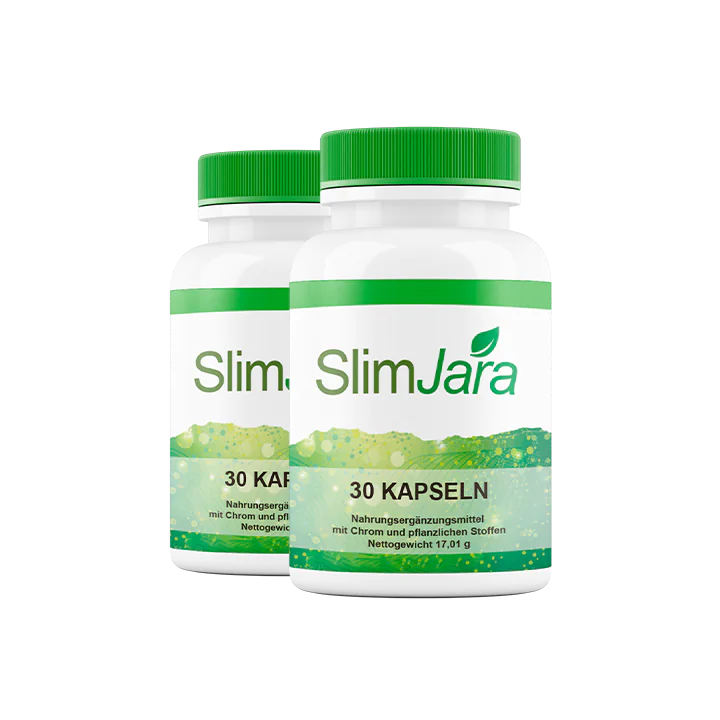
Ginger as a daily capsule
A standardized extract, one capsule a day. Composition, amounts per daily dose and prices on the product page.
Sources
- Mao QQ, Xu XY, Cao SY, et al. “Bioactive Compounds and Bioactivities of Ginger (Zingiber officinale Roscoe).” Foods, 2019; 8(6):185. PMID: 31151279. pubmed.ncbi.nlm.nih.gov/31151279
- Zhang M, Zhao R, Wang D, et al. “Ginger (Zingiber officinale Rosc.) and its Bioactive Components Are Potential Resources for Health Beneficial Agents.” Phytotherapy Research, 2021; 35(2):711–742. PMID: 32954562. pubmed.ncbi.nlm.nih.gov/32954562
- Dabeek WM, Marra MV. “Dietary Quercetin and Kaempferol: Bioavailability and Potential Cardiovascular-Related Bioactivity in Humans.” Nutrients, 2019; 11(10):2288. PMID: 31557798. pubmed.ncbi.nlm.nih.gov/31557798
- Liu L, Barber E, Kellow NJ, Williamson G. “Improving quercetin bioavailability: A systematic review and meta-analysis of human intervention studies.” Food Chemistry, 2025; 477:143630. PMID: 40037045. pubmed.ncbi.nlm.nih.gov/40037045
Advertisement. This page is an independent promotional publication and not an editorial article by a news outlet. Purchases made through links on this page may earn a commission; the price you pay does not change as a result. Please check the details on ingredients, dosage and availability on the product page. The content is for general information.
SlimJara
A food supplement with chromium and plant-based ingredients. One capsule daily.
Current price on the product page
At a glance
- Category: Food supplement
- Form: Capsule
- Pack size: 30 capsules
- Use: 1 capsule daily
- Contains: Chromium and plant-based ingredients
- Not a medicinal or medical product
Food supplements are not a substitute for a balanced, varied diet and a healthy lifestyle.
© 2026 Kitchen Journal
Food supplements are not a substitute for a balanced, varied diet and a healthy lifestyle. Do not exceed the stated recommended daily dose. Keep out of reach of young children.